RAG, Explained: Why Chatbots Make Things Up — and How Retrieval Fixes It
Large language models are confident liars. Retrieval-Augmented Generation is the simple, clever trick that grounds them in real documents. Here's how it works, no PhD required.
You've probably watched a chatbot confidently invent something. A fake legal case. A book that doesn't exist. A confidently wrong answer delivered with perfect grammar. This is called hallucination, and it's not a bug you can patch — it's a consequence of how these models work.
The most important fix the industry found is called RAG: Retrieval-Augmented Generation. The name is terrible. The idea is elegant. Let me explain it properly.
Why models make things up
A language model is, at its core, a prediction machine. It learned patterns from enormous amounts of text, and when you ask a question, it generates the most plausible-sounding continuation — not the most true one. It doesn't "know" things the way you do. It doesn't check a database. It vibes.
This works shockingly well until it doesn't. Ask about something rare, recent, or specific — your company's internal docs, last week's events, niche technical details — and plausibility diverges from truth. The model doesn't know it doesn't know. So it improvises, fluently.
The RAG trick, in plain English
RAG adds one step before the model answers: look it up first.
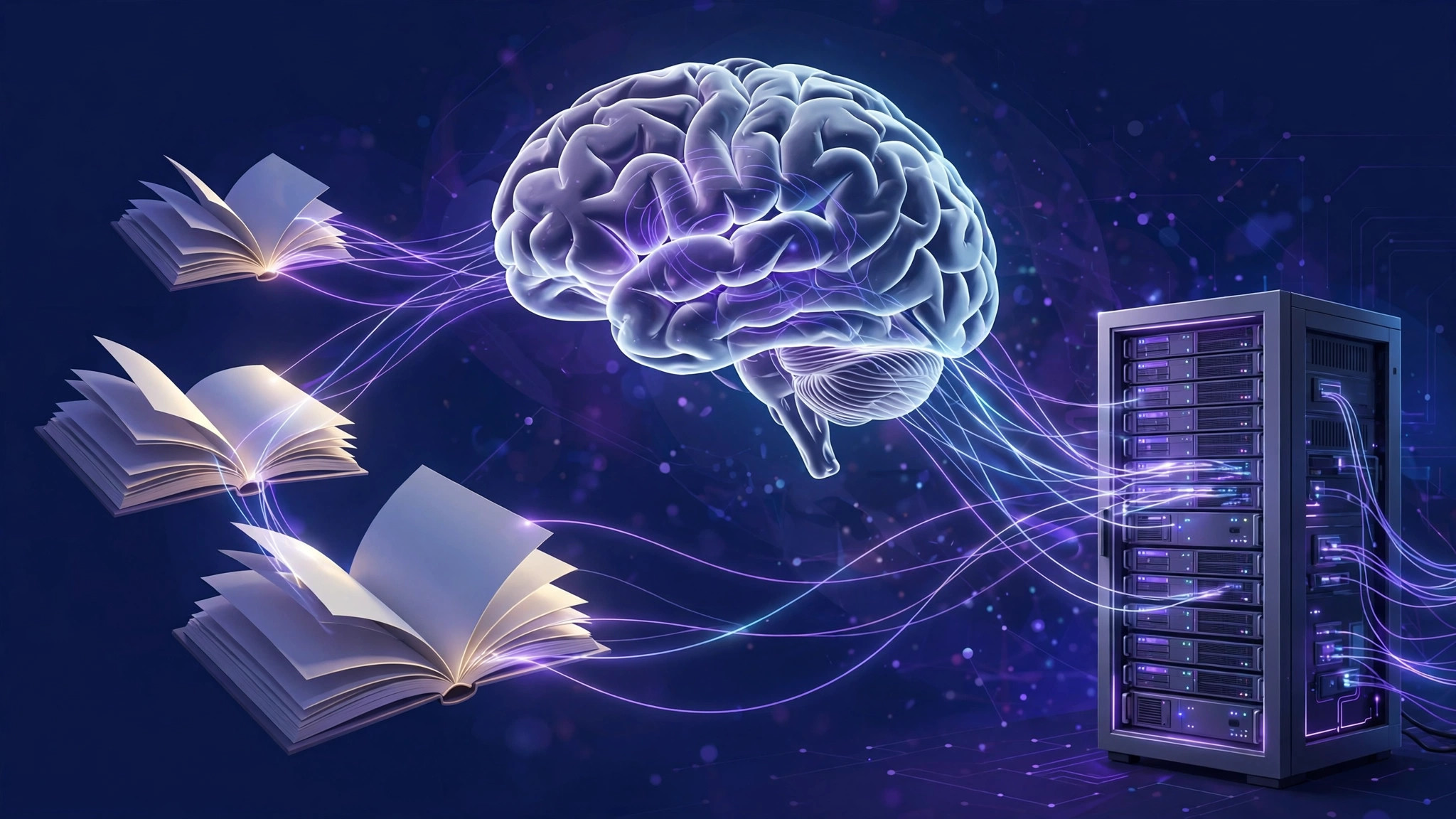
Instead of asking the model to answer from memory alone, the system:
- Searches your documents for passages relevant to the question (like a very fast librarian)
- Hands those passages to the model along with the question: "answer using this material"
- Generates an answer grounded in actual retrieved text
That's it. The model still writes fluently, but now it's working from source material instead of vibes. It's the difference between asking someone to recall a contract from memory versus handing them the contract and asking them to summarize it.
Why this changed everything
RAG is the reason AI assistants became useful for real work instead of just impressive demos:
- Private data. A model trained in 2024 can't know your company's 2026 product roadmap. RAG lets it answer from your documents without retraining anything.
- Freshness. Swap the documents, and the answers update instantly. No waiting for the next model release.
- Citations. Because the answer comes from retrieved passages, the system can show you which passages — so you can verify instead of trusting blindly.
- Cost. Retraining a frontier model costs tens of millions. Updating a document index costs pennies.
Nearly every serious enterprise AI deployment you've heard of — customer support bots that actually know the product, legal assistants that cite real clauses, medical tools that reference actual guidelines — runs on RAG or its descendants.
Where it still falls short
RAG is not magic, and the failure modes are instructive:
Garbage in, gospel out. If the retrieved documents are wrong or outdated, the model will faithfully repeat wrong information with full confidence. Retrieval quality is everything.
The "lost in the middle" problem. Models pay most attention to the beginning and end of long inputs. Bury the crucial paragraph in the middle of 50 retrieved pages and the model may ignore it. Good systems rank and trim aggressively.
It can't reason about what isn't there. RAG grounds answers in documents, but if the answer requires connecting dots across sources — or the documents simply don't contain it — you're back to vibes.
The takeaway
Whenever someone tells you their AI "doesn't hallucinate," ask one question: what does it retrieve from? The answer tells you everything about how much to trust it. A chatbot answering from memory is a talented improviser. A chatbot answering from your documents is a research assistant.
RAG didn't make AI smarter. It made AI accountable — and in practice, that turned out to matter more.